
PROJECT UPDATES
GEOFLEXHEAT showcases the future of flexible geothermal solutions
at the GEO-Cluster 1st MML workshop
On 21 October 2025, the GEOFLEXHEAT project took part in the GEO-Cluster 1st MML Workshop, an event bringing together leading EU-funded initiatives to exchange insights on the future of geothermal energy.
Representing GEOFLEXHEAT, Martina Battocchio, EU Projects Officer at the European Heat Pump Association (EHPA) and leader of the project’s Dissemination, Exploitation and Communication activities, presented how GEOFLEXHEAT is mapping market needs and addressing the policy and technical barriers that limit geothermal uptake in Europe.
A geothermal market at an inflection point
Across Europe, geothermal exploration and project pipelines are expanding, marking a turning point for the sector. The rise of digital twins, containerised geothermal systems, and cross-sector expertise from drilling and process industries are helping reduce technical uncertainty.
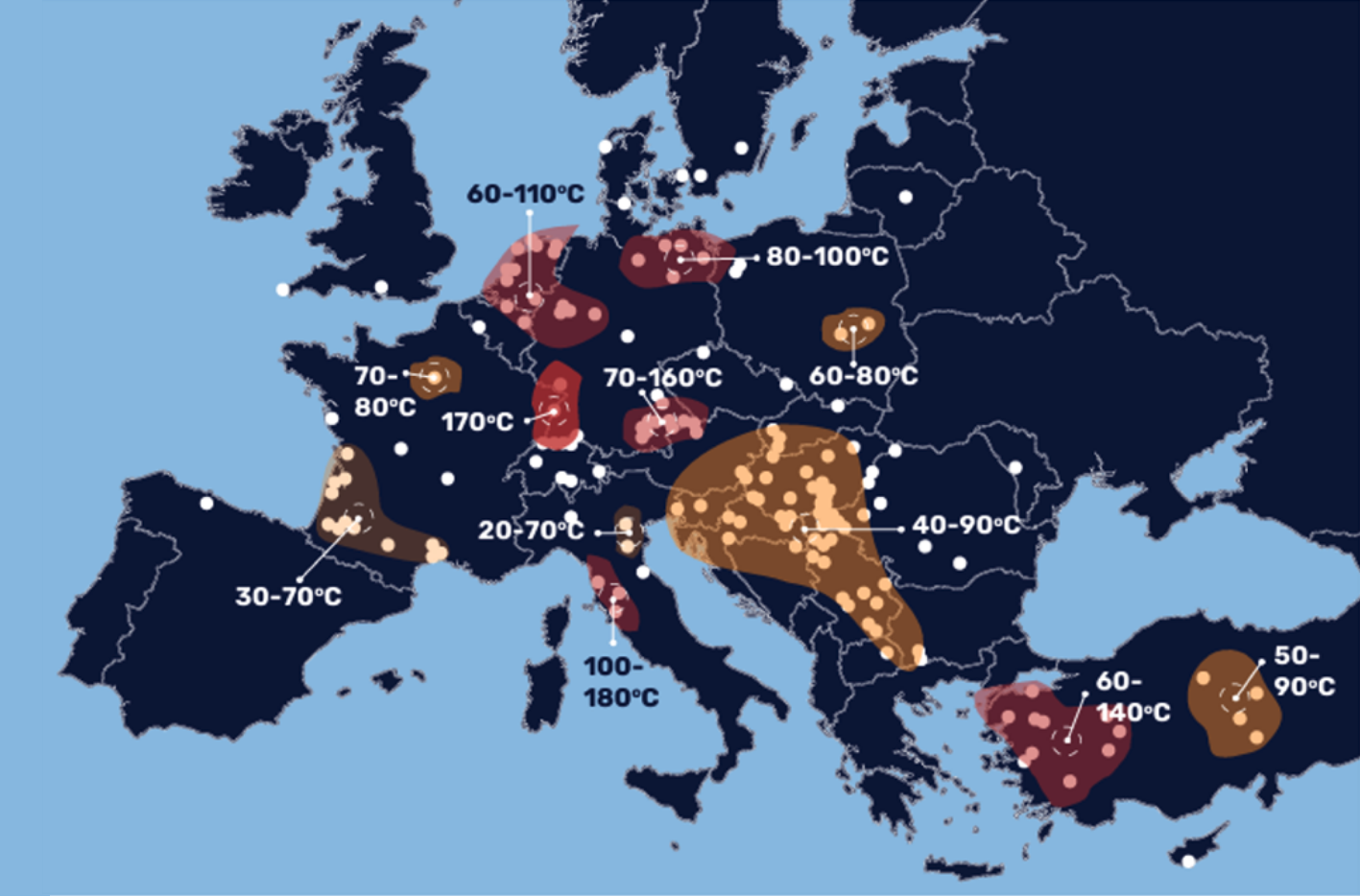
Figure 1. A map of Europe showing major geothermal projects.
Source: 2023 EGEC Market Report
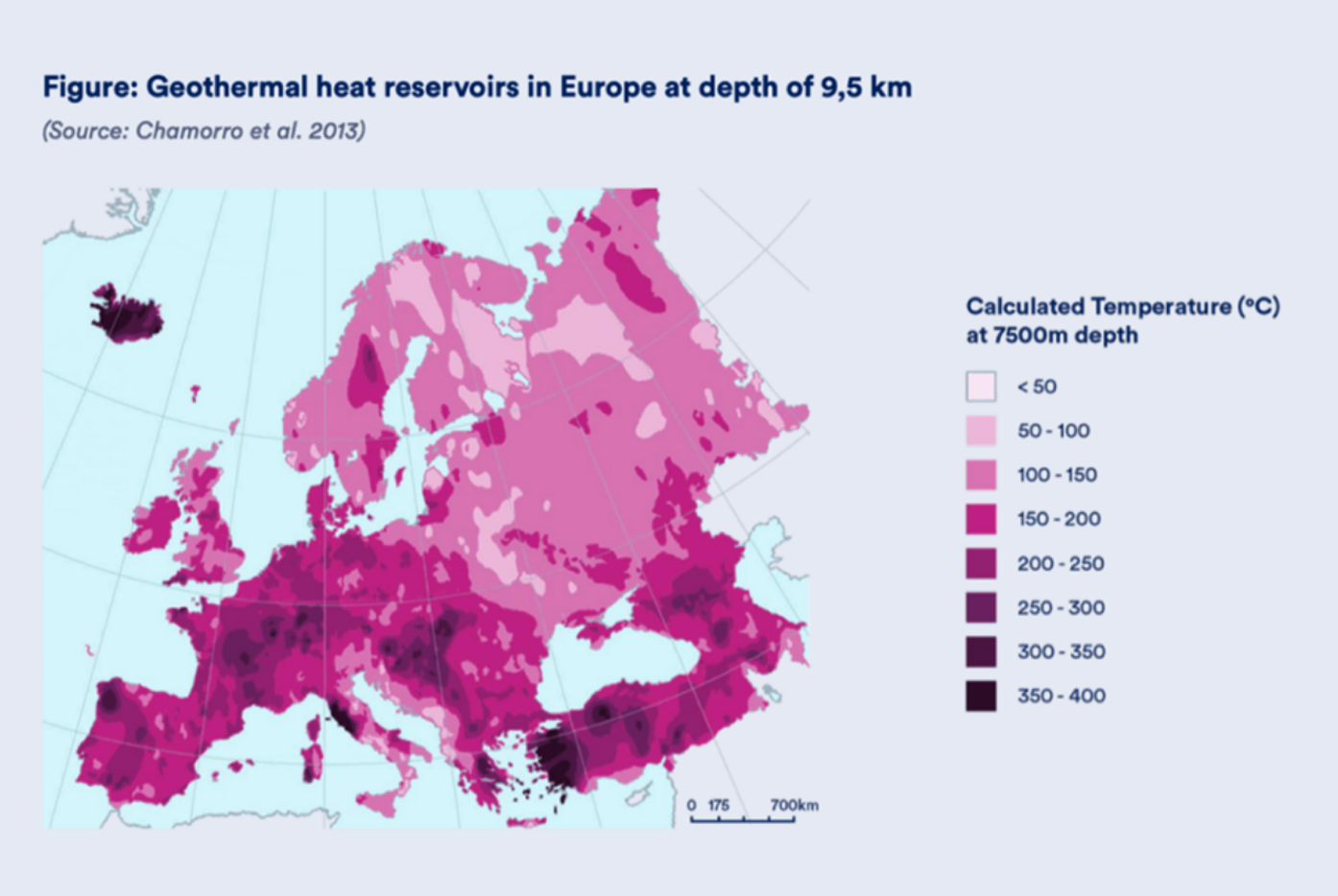
However, despite clear progress, the scale-up remains constrained by several structural challenges: notably complex permitting procedures, perceived seismic risks, and limited access to finance for early-stage and demonstration projects.
Compared to wind and solar, geothermal energy still accounts for a modest share of renewable generation, yet it holds strategic potential for industrial decarbonisation, district heating, and stable renewable heat supply.
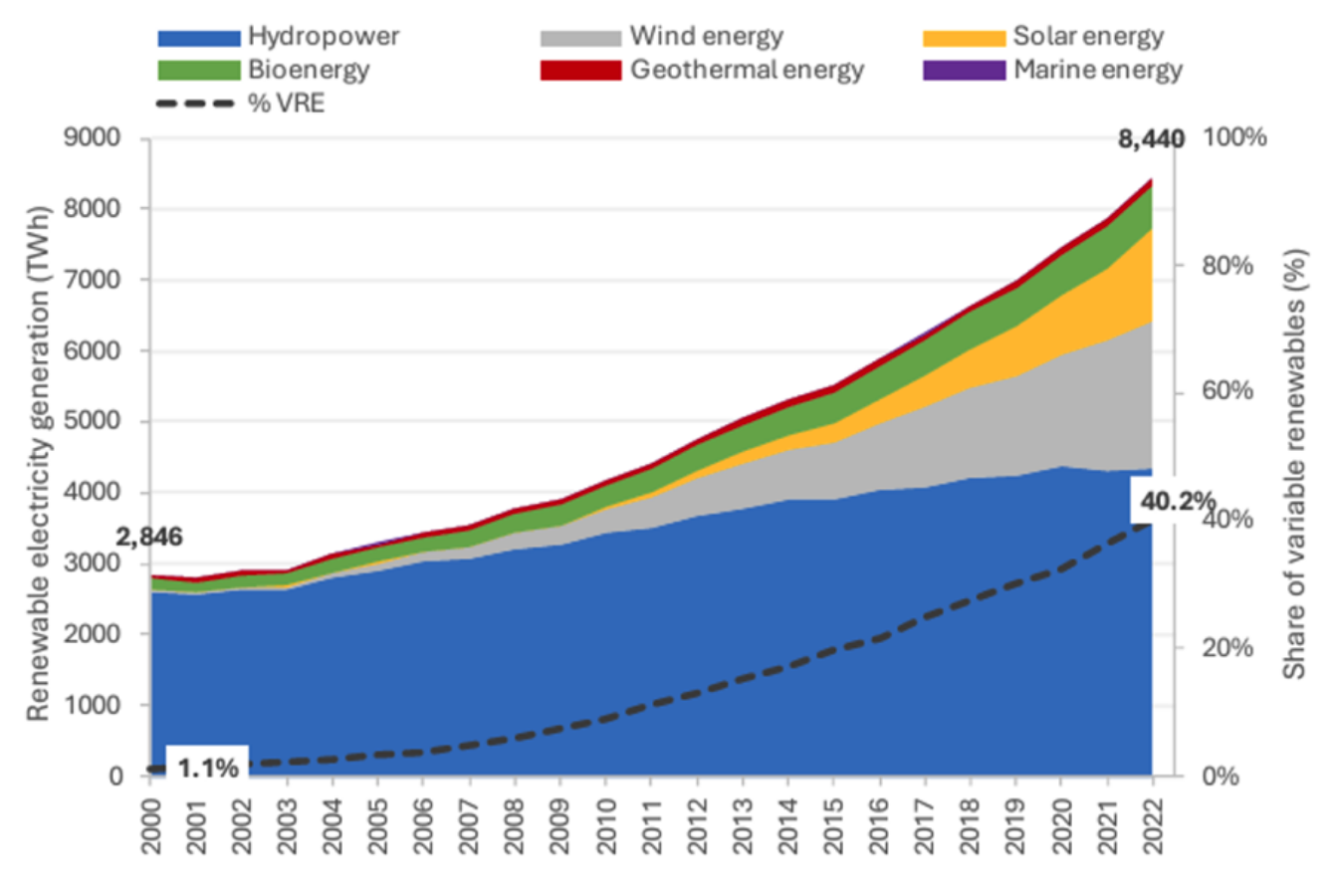
Figure 2. The chart shows stacked growth of renewables by type (wind, solar, geothermal, etc.), with geothermal contributing a very small portion relative to wind and solar.
Source: IRENA
GEOFLEXHEAT: modular technology for a flexible and replicable future
At the technical core of GEOFLEXHEAT lies the ambition to develop flexible, containerised geothermal heat modules that can be replicated and adapted across different industrial and geographical contexts.
These modules aim to reduce costs, speed up deployment, and facilitate integration into existing heating networks and industrial processes, enabling geothermal energy to serve as a scalable solution for clean heat across Europe.
Through its pilot sites and testing activities, GEOFLEXHEAT will demonstrate how standardised, modular systems can de-risk investment, shorten project lead times, and improve the predictability of geothermal performance.
Policy outlook: from supportive signals to practical implementation
At the policy level, the EU has sent strong signals in support of geothermal through initiatives like REPowerEU and the SET-Plan. These frameworks underline the technology’s critical role in achieving Europe’s energy transition.
However, implementation remains primarily national, and progress is uneven.
Some countries, such as Germany, are already moving toward fast-track permitting and supportive risk-mitigation schemes, while others are only beginning to establish frameworks for geothermal development.
Ms. Battocchio highlighted that to ensure widespread adoption, the sector now needs harmonised, pragmatic regulations, targeted public de-risking mechanisms, and standardisation for industrial applications.
GEOFLEXHEAT’s policy recommendations
As part of its mission to bridge technology and policy, GEOFLEXHEAT has identified four key policy actions to unlock geothermal’s full potential in Europe:
- Permit streamlining – Implement one-stop permit procedures with clear review timelines for industrial and demonstrator projects.
- Targeted de-risking finance – Develop EU or national blended funding instruments to co-finance early drilling and first-of-a-kind deployments.
- Standardisation and replication – Fund standard test protocols and establish a standardisation roundtable for containerised geothermal modules.
- Transparency and community engagement – Require environmental baseline data, real-time monitoring, and participatory processes for geothermal projects.
These recommendations aim to strengthen investor confidence and accelerate the path from demonstration to commercial-scale deployment.
Empowering stakeholders to shape Europe’s clean heat transition
GEOFLEXHEAT also recognises that the geothermal transition depends on active stakeholder participation.
Ms. Battocchio encouraged industry players, policymakers, and citizens alike to engage through:
European Commission public consultations and calls for evidence
The Have Your Say platform and dedicated working groups
Stakeholder Advisory Boards within EU-funded projects
The Clean Heat Industry Group, connecting industry innovation with policy dialogue
Sources and references
- EGEC (2023), Geothermal Market Report 2023
- IRENA (2023), Renewable Energy Statistics 2023
- European Commission (2022), REPowerEU Plan – COM(2022) 230 final
- European Commission, Strategic Energy Technology Plan (SET-Plan), Action 8: Renewable Heating and Cooling
- Empowering stakeholders to shape Europe’s clean heat transition” mancano i bullet points.